Is Driving in Spain Easy for Americans? A Spain Self-Drive Vacation Guide to Cars, Roads, Parking & Permits
You've fallen for the idea of a Spain self-drive vacation — the two of you, a small car, a coast road, a winery with rooms at the end of it. Then the second-guessing starts. Stick shift? Mystery tolls? Police who want a permit you've never heard of? Here's the honest answer: driving in Spain is genuinely easy for Americans, often easier than driving at home, with about four modern wrinkles worth knowing before you go. Get the paperwork and the city rules right, and the open road does the rest. Below is everything that actually matters — and the handful of things that bite.
The short version
Picture the first hour. You land in Málaga or Bilbao, collect a compact diesel hatchback, and pull onto an autovía that's smoother and emptier than the interstate you left behind. Signage is clear, lanes are wide, and Spanish drivers are calmer than their reputation suggests. Ninety minutes later you're climbing into hill country with no one behind you. The driving itself is the easy part. Spain spent two decades building some of Europe's best free highways, and you'll spend most of your trip on them.
The friction isn't the road — it's the edges. The permit you should be carrying, the transmission you have to request in advance, and the city centers that have quietly become camera-enforced restricted zones. Sort those three before you go, and a self-drive trip through Spain is close to frictionless.
The driving is the easy part. It's the paperwork, the parking, and the city limits that separate a smooth trip from an expensive one.
The permit Americans forget
Your U.S. license alone is not enough, and this is the single most common mistake. To drive legally in Spain you should carry an International Driving Permit (IDP) alongside your home license. The IDP isn't a license in its own right — it's a standardized translation of yours — so you carry both, together, the whole trip.
The catch: you can only get one before you leave. AAA issues them for about $20 while you wait, no test required, and you cannot obtain one once you've landed in Spain. Rental desks at the European chains increasingly ask to see it at pickup, and the Guardia Civil can fine you anywhere from roughly $100 to $575 (€90–€500) if you're stopped without one. This isn't theoretical — Spain handed out more than 21,000 invalid-license fines in a single recent year, plenty of them to tourists driving on a U.S. license with no IDP.
Keep four things in the glovebox at all times: your license, your IDP, your passport, and the rental agreement. One note on age: the rental minimum is 21, and drivers under 25 usually pay a young-driver surcharge.
Book an automatic — early
Europe drives stick. If neither of you wants to relearn a manual on mountain switchbacks, reserve an automatic the moment you book. They're a smaller slice of the fleet, they cost more, and they're the first cars to sell out in peak months. Locking one in early is the difference between a relaxed trip and a white-knuckle one.
Most Spanish rentals are diesel (gasóleo), not gasoline (gasolina) — confirm which at pickup, because filling a diesel tank with petrol is a costly, trip-ending mistake. Pumps are loosely color-coded, but don't trust color alone; read the label every time. And return the car full-to-full, which is the standard policy, to dodge the rental company's inflated refueling charge.
Free highways, shrinking tolls
Spain has two motorway types that look identical at speed. Autovías (an "A" plus a number) and national roads (an "N") are free, state-owned, and excellent. Autopistas de peaje ("AP") are tolled, privately run roads. Here's the good news nobody mentions: Spain has spent years handing tolled motorways back to the public, so the tolled network has shrunk to roughly 870 miles — less than half what it was a decade ago. Much of the famous AP-7 along the coast, plus the AP-1, AP-2, and AP-4, are now completely free.
Where tolls do remain, they're modest. The full tolled run from Madrid to Barcelona is around $40 (€35–40), and there's a free parallel route (the A-2) that adds maybe half an hour. Pay with a card or cash right at the booth — you do not need a Via-T transponder for a normal couple's road trip; that's for commuters and freight. The motorway speed limit is 120 km/h, about 75 mph, and the road quality more than earns it.
The real challenge: city centers
If anything trips up a Spain self-drive vacation, it's the cities — and the rules changed recently. Under a 2021 national law, every Spanish city over 50,000 people now runs a Low Emission Zone (ZBE), and in 2026 more than fifty of them — Madrid, Barcelona, Seville, Valencia, Málaga — enforce it with automatic cameras. Drive into a restricted zone in the wrong vehicle and a roughly $220 (€200) fine lands in your mailbox weeks later, with a tidy admin fee from the rental company on top.
The relief for you: a Spanish rental car already carries the correct emissions sticker, so its category is recognized automatically and you skip the foreign-vehicle registration that catches out people driving in from France. Glance at the windshield sticker when you collect the car and you're covered.
Parking is the bigger daily puzzle, and it's all in the curb color. White is free. Blue (zona azul, or ORA) is paid and time-limited — pay at the meter or an app like ElParking and leave the ticket on the dash. Green is residents-only, and yellow means don't. Blue zones generally run weekday business hours and go free on Sundays.
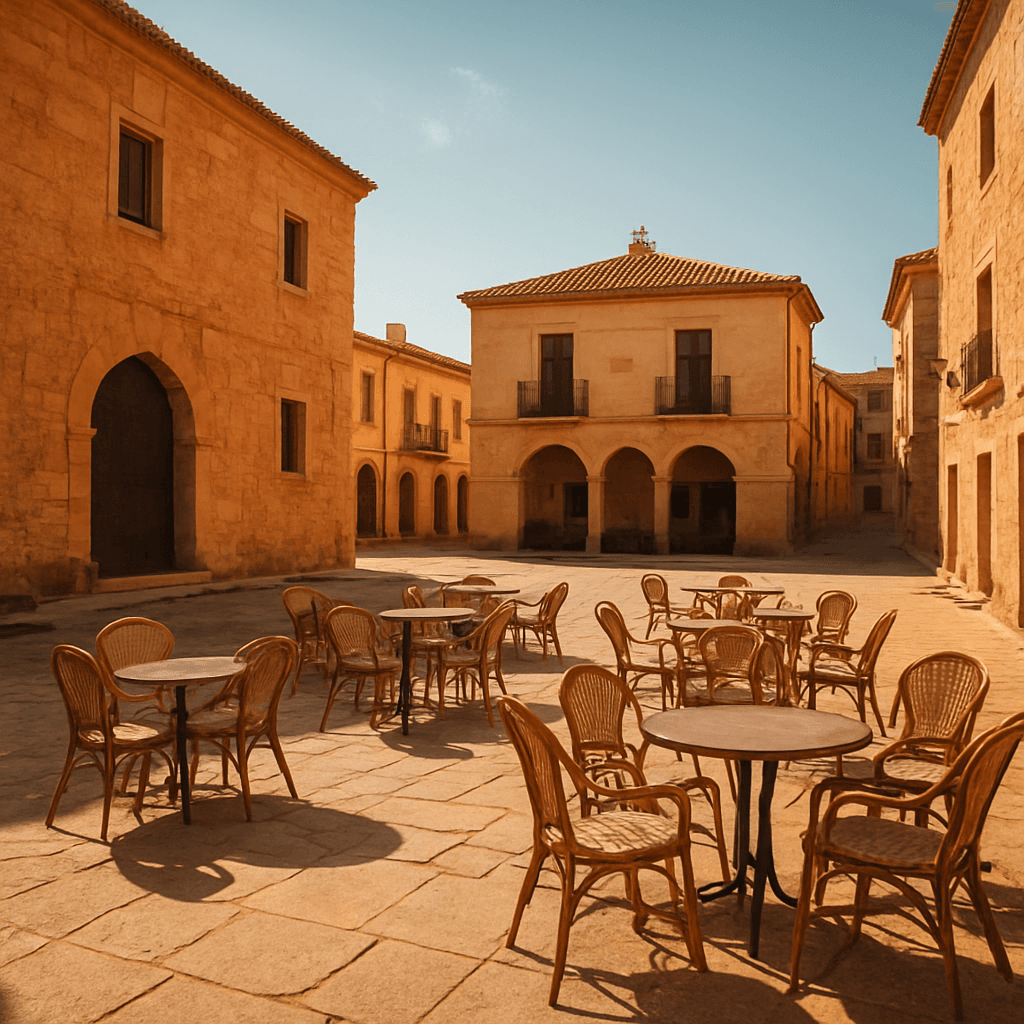
Honestly, the smart move for a couple is to skip the street-parking lottery entirely: leave the car in an underground garage for about $22–32 (€20–30) a day, or use your hotel's parking, and explore the old town on foot. You didn't fly to Spain to circle a roundabout hunting for a space.
Don't fight the cities. Park the car on the edge, walk in for the evening, and save the driving for the gorgeous nothing in between.
Five rules that catch Americans off guard
A few habits from home will cost you here. There's no right turn on red unless a green arrow explicitly allows it. At an unmarked intersection, the car on your right has priority — counterintuitive if you're wired for stop-sign logic. Phones must be fully hands-free; even touching a handheld is about a $220 (€200) fine.
The one that matters most for a wine-country couple: the blood-alcohol limit is 0.05%, well below most U.S. states, and roadside breath tests are routine. Two generous pours at lunch can put you over. The graceful fix on a tasting trip is the obvious one — one of you stays at zero and drives, and you trade off by region or by day.
Finally, Spanish law requires a reflective vest and warning triangles in the car (a new V16 emergency beacon is replacing the triangles through 2026). Rentals usually include them, but open the trunk and confirm before you leave the lot.
The verdict: is a Spain self-drive vacation worth it?
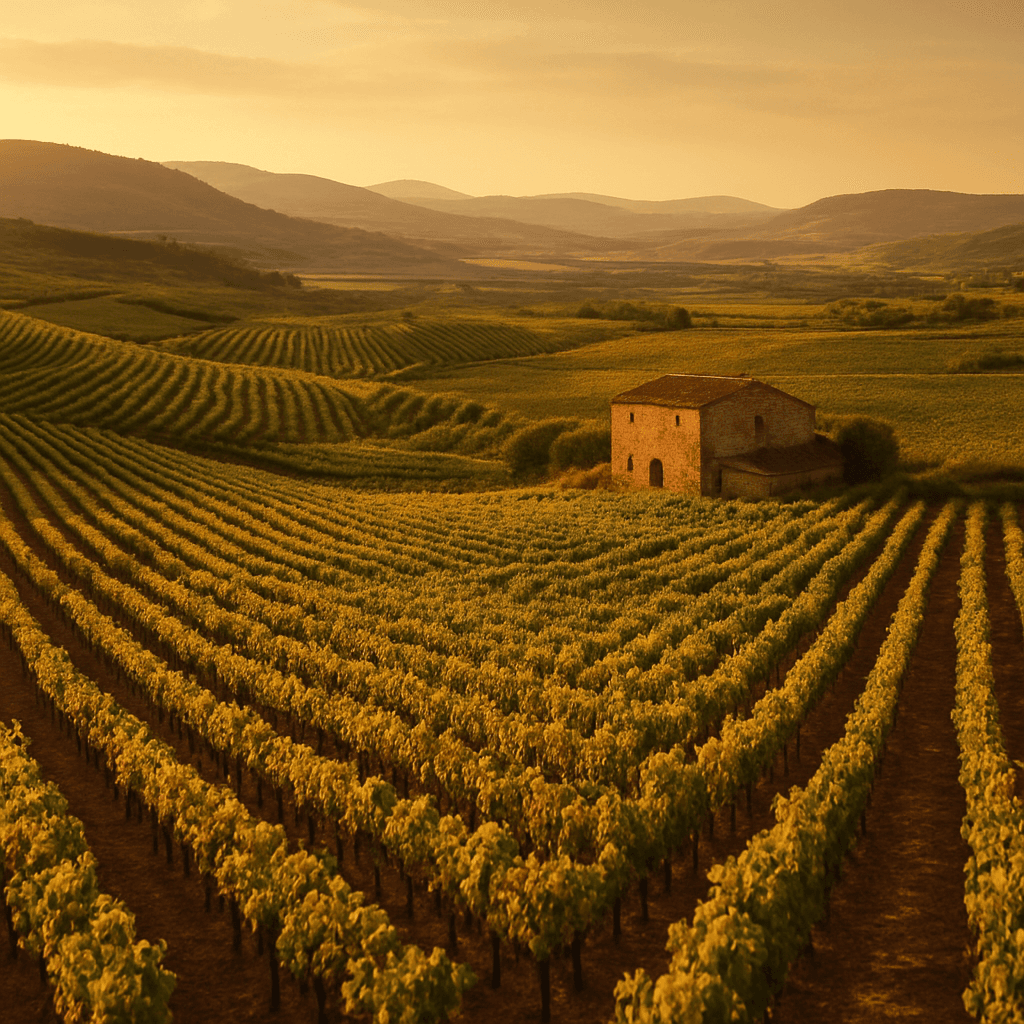
Drive yourself if your trip lives in the spaces between cities — the wine routes through La Rioja and Ribera del Duero, the white villages of Andalucía, the Costa Brava coast road, a parador-to-parador loop. That's where a car turns a vacation into freedom, and exactly where Spain makes it easy.
Lean on the trains if your itinerary is mostly big cities. Madrid, Barcelona, and Seville are linked by fast, civilized AVE trains, and a car in those centers is just a parking liability.
Do both — where most couples land — by taking the train between the major cities and renting only for the rural stretch. Pick the car up as you leave town, drop it as you reach the next one, and you get the open road without the urban headache.
Let us handle the wrinkles
The driving is the easy part. Sequencing the route so the car appears exactly when you want it, the hotels all have parking, and the tasting days have a designated driver built in — that's the part worth handing off. It's what we do at Freed Travel: we design a custom Spain road trip around the two of you, down to which garage to use in Seville and which wineries have rooms so no one has to drive after dinner. Tell us how you like to travel, and we'll build the rest.